



Organic vs chemical fertilizers: Which is better for soil health






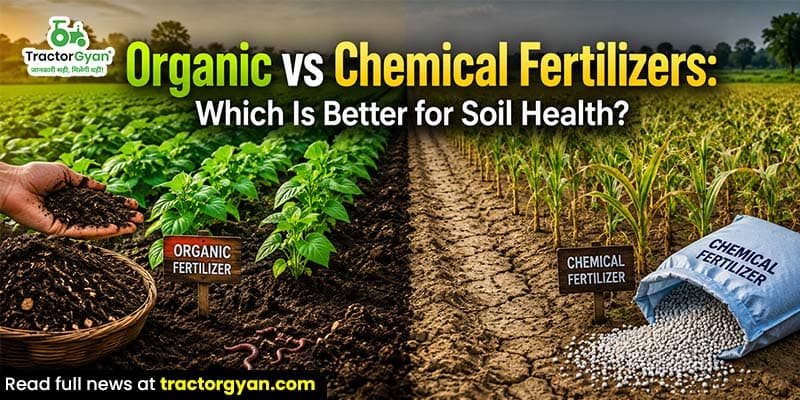
Table of Content
Fertilizers provide the necessary nutrients for crop growth, yield and soil fertility. The most important organic and chemical fertilizer used by farmers are used for crop analysis. Both have a positive effect on plant growth but have different impacts on soil health. Natural fertilizers enhance soil structure and boost the number of microorganisms in the soil soil while chemical fertilizers release nutrients rapidly, but balanced application keeps the soil in good condition over time. The selection of the appropriate fertilizer is based on the type of crop, soil condition, nutrient demand and agro practices.
What Are Organic Fertilizers?
Organic fertilizers are naturally derived fertilizers containing plant, animal, or biological materials. They are commonly applied as farmyard manure (FYM), compost, vermicompost, green manure, poultry manure, and oil cakes. A slow release nutrient, these fertilizers release nutrients slowly over time, providing nitrogen, phosphorus, potassium, and micronutrients over time.
Organic fertilizers are also good for soil organic carbon, water holding capacity and beneficial microorganisms. It is reported in agricultural studies that soils with greater organic matter have improved moisture and nutrient holding capacity, and are more resilient when dry.
What Are Chemical Fertilizers?.
- Chemical fertilizers are synthetic fertilizers with concentrated nutrients. Common examples are urea (46% N), DAP (18% N and 46% P) and MOP (60% K) or NPK fertilisers.
- They dissolve rapidly and provide nutrients rapidly, thus aiding crop growth and addressing nutrient shortages
- However, overuse can decrease soil health, impair soil organisms and increase nutrient losses
- Soil tests allow growers to use the proper fertilizer at the appropriate rate.
How Organic Fertilizers Improve Soil Health?
Organic fertilizers enhance soil organic matter, soil structure and beneficial microorganism populations.
Improves water holding capacity, aeration & root development; slowly releases nutrients. The repetition benefits the soil, nitrogen usage, and long-term sustainable crop production.
How Chemical Fertilizers Affect Soil Health?
Chemical fertilizers feed the plants directly and promote faster growth at critical growth periods.
They are generally used in intensive farming where they provide regular nutrient supply and enable higher output yields.
Over time, however, continuous use without fertilization with organic matter can lead to a decrease in soil biological activity and soil structure.
Excessive use can cause nutrient imbalance, soil acidification in certain areas and reduced fertilizer effectiveness. Fertiliser at a lower rate in combination with organic manure helps maintain soil fertility and fulfil crop nutrient requirements.
Quick Links






Organic vs Chemical Fertilizers: Advantages and Disadvantages.
Organic Fertilizers
Advantages:
- Increase long term soil health.
- Boost soil organic matter and beneficial soil microorganisms.
- Improve soil structure and water holding capacity:
- Minimize environmental impact and promote sustainable agriculture.
- Release nutrients gradually, reducing nutrient loss.
Disadvantages:
- Release nutrients slowly.
- Use in higher amounts than chemical fertilizers
- May not supply nutrients at key crop development stages.
- Bulk volume can make transportation and storage more of a challenge.
Chemical Fertilizers
Advantages:
- Deliver nutrients fast for quicker plant growth.
- Increase productivity within the short crop cycle.
- Simple application and immediately accessible
- Provide accurate nutrient concentration for various crop requirements.
- Help correct nutrient deficiencies rapidly.
Disadvantages:
- An overuse will decrease soil fertility in the long term.
- Can reduce good soil bacteria activity.
- May cause nutrient imbalance if not applied correctly.
- Multiple uses can raise the cost of production in farming.
- Overuse can result in water and soil pollution.
Which Fertilizer Produces Better Crop Yield?
- Organic and chemical fertilizers can develop good yield if they are used correctly.
- Chemical Fertilizers supply nutrients rapidly and allow plants to grow faster and faster yields in short term.
- Organic fertilizers require a longer time to increase the fertility of the soil and promote long-term sustainable production of crops.
- Organic manure applications with balanced chemical fertilizers increase the availability of nutrients in the soil.
- This mix helps build soil organic carbon, water holding capacity, and healthy soil
- Soil test results, crop nutrient requirement and soil conditions are essential to selecting appropriate fertilizers for optimum yields and long-term soil health
Why Trust Tractor Gyan?
Tractor Gyan keeps you updated and informed regarding agriculture, farm machinery, fertilizers and farm management. It assists farmers to make better choices to boost productivity and soil health while giving them a chance to compare products and ensure they adopt the latest farming methods.
Category



Read More Blogs

Mahindra 265 DI Yuvo Tech Plus is a 33 HP tractor suitable for small and medium farms in India. It is suitable for the various tasks of the daily farm, including tillage, sowing, haulage, crop transport, and spraying. It is a powerful...

Goodyear India just added a new player to its tractor tyre lineup, and it's designed with one goal in mind: helping tractors grip better and last longer in tough field conditions. The new tractor tyre, Ultra Grip, was officially unveiled at...

अगर आप नया ट्रैक्टर खरीदने की योजना बना रहे हैं लेकिन बजट की चिंता है, तो ट्रैक्टर लोन आपके लिए एक अच्छा विकल्प हो सकता है। आज लगभग सभी प्रमुख बैंक और फाइनेंस कंपनियां किसानों को आसान किस्तों पर ट्रैक्टर लोन उपलब्ध...
Write Your Comment About Organic vs chemical fertilizers: Which is better for soil health
.webp&w=1920&q=75)
Top searching blogs about Tractors and Agriculture
.webp&w=2048&q=75 "Top 10 Tractor brands in india")
26 May 2026
26 May 2026
29 Jul 2025

08 Sep 2025

17 Jun 2026

30 Jul 2025
19 May 2026
01 Jun 2026

15 Jun 2026

30 Jul 2025
09 Feb 2026
.webp&w=2048&q=75 "Top 10 tractors under 5 Lakhs")
19 Mar 2026
.webp&w=2048&q=75 "Top 12 agriculture tools in India")
18 May 2026

26 Dec 2025